How to Make Biscuit Dough Without a Rolling Pin
A rolling pin is a convenience, not a requirement. If you have flour, cold butter, buttermilk, and two hands, you can make biscuit dough with real flaky layers. The method is simple: pat the dough into a rough rectangle, fold it over itself a few times, and press it back out. Each fold creates thin sheets of butter and dough. When the biscuits bake, those sheets steam apart. No pin needed.
Why Your Hands Work for Biscuit Dough
Rolling pins press dough into an even sheet, but they also compress it. That compression can make biscuits tough if you roll too hard or too many times. Your hands are gentler. You can feel when the dough is resisting, when the butter is warming, and when a little more flour is needed. That feedback is useful.
Patting and folding also builds layers differently than rolling. When you fold dough over itself, you stack butter-streaked sheets. Those stacks become the flaky strata that pull apart at the table. A rolling pin can do this too, but it is not the only tool. A bench scraper, a fork, and your palms are enough.
The main risk is overworking. Biscuit dough wants to stay a bit shaggy and cool. If you knead it like bread, you develop gluten and the biscuits turn chewy instead of tender. So use light pressure, work quickly, and stop when the dough holds together.
What You Need Before You Start
You do not need special equipment. A few basic items make the process easier:
- A wide mixing bowl
- A fork, pastry blender, or your fingertips for cutting butter
- Cold butter, cut into small cubes
- Cold buttermilk or another cold acidic liquid
- A bench scraper or stiff spatula
- Parchment paper or a lightly floured counter
- A sharp knife or a biscuit cutter
- Plastic wrap or a clean kitchen towel
Keep everything cold. If your kitchen is warm, chill the bowl and the flour for ten minutes before you start. Cold butter is the difference between flaky layers and flat, greasy biscuits.
The Pat-and-Fold Method, Step by Step
This is the core technique. Read it once, then work through it.
- Mix the dry ingredients. Whisk flour, baking powder, salt, and any sugar together in a large bowl.
- Cut in the butter. Add the cold butter cubes. Use a fork, pastry blender, or your fingertips to work the butter into the flour until the pieces are about the size of peas. Some larger flakes are fine.
- Add the liquid. Pour in cold buttermilk. Stir with a fork until a shaggy dough forms. It will look messy. That is normal.
- Turn it out. Scrape the dough onto a lightly floured surface or a piece of parchment. Gather it into a rough mass.
- Pat, do not roll. Use your palms and the heels of your hands to press the dough into a rectangle about one inch thick. If it sticks, dust lightly with flour. Do not press hard.
- Fold like a letter. Fold one third of the rectangle toward the center. Fold the other third over that. You now have a stack.
- Pat again. Press the stack back into a rectangle. Repeat the fold and pat two or three more times. This builds layers.
- Final pat. Shape the dough into a rectangle about three-quarters to one inch thick. Keep the edges as straight as you can.
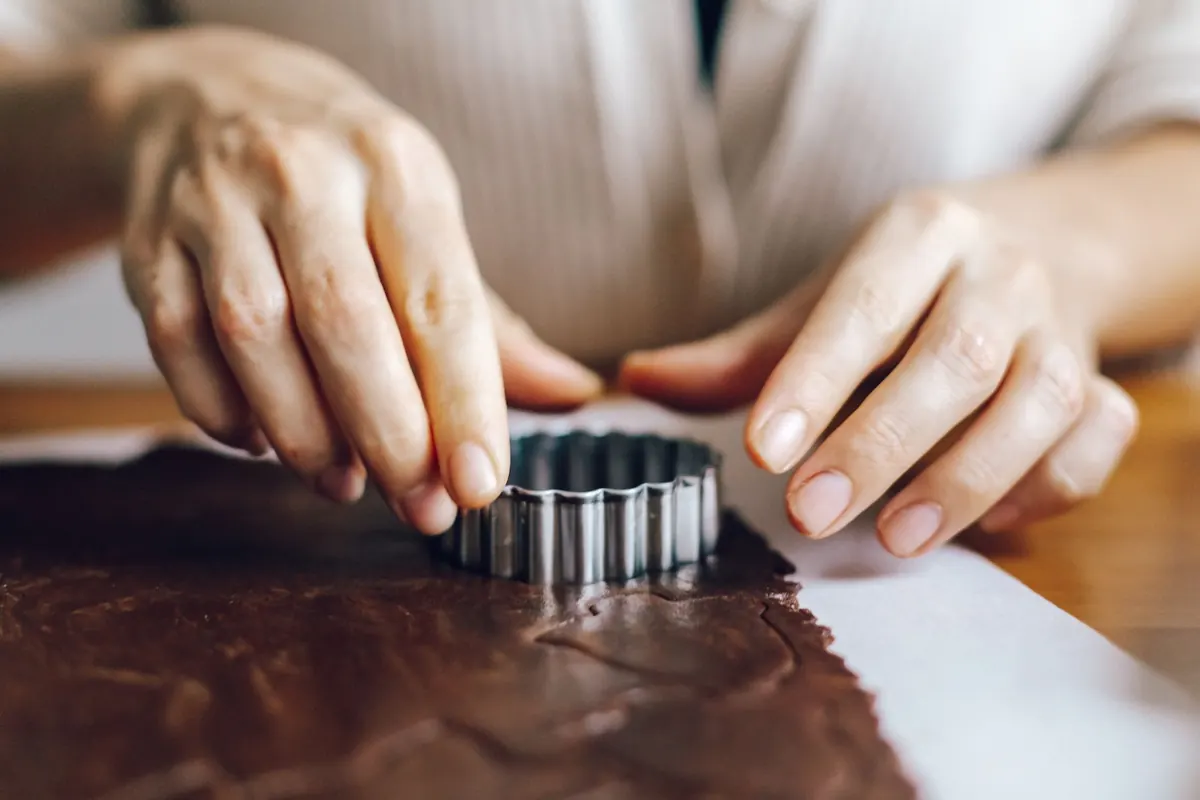
- Cut straight down. Use a sharp knife or cutter. Press straight down without twisting. Twisting seals the edges and stops layers from rising.
- Bake. Place the biscuits on a lined baking sheet, close together for soft sides or apart for crisp edges. Bake according to your recipe.
How Folding Creates Flaky Layers
Each fold multiplies the number of butter-dough sheets. If you start with pea-sized butter pieces and fold three times, you create dozens of thin layers. In the oven, the water in the butter turns to steam. That steam pushes the layers apart. The result is a biscuit you can split with a fork and see distinct flakes.
Three or four folds are enough. More than that and the dough warms up and the butter starts to blend into the flour. When butter blends completely, you get a soft, cake-like crumb instead of flakes. So watch the dough. If it feels warm or greasy, stop folding and chill it for five minutes.
A bench scraper is helpful here. It lets you lift and fold the dough without stretching it. If you do not have one, a stiff spatula or your hands work fine.
Troubleshooting Sticky, Crumbly, or Warm Dough
The dough is sticky
Dust with a little flour, but not too much. Too much flour makes dry biscuits. Use a light hand and work quickly. If the dough is very sticky, it may need a brief chill.
The dough is crumbly
Sprinkle a teaspoon of buttermilk over the dry spots and fold gently. Do not add a lot of liquid at once. The dough should hold together when you press it, but it should not be wet.
The butter is softening
Put the bowl or the dough in the refrigerator for ten minutes. Warm butter absorbs into the flour and ruins flakiness. Cold butter stays in distinct pieces and creates steam pockets.
The dough springs back
Let it rest for five minutes. Gluten needs time to relax. Then pat again. If it still springs back, you may have overworked it. Next time, use a lighter touch.
Shaping and Cutting Without a Rolling Pin
Once your dough is patted to the right thickness, you have options.
- Round biscuits: Use a floured biscuit cutter or the rim of a glass. Press straight down. Do not twist.
- Square biscuits: Cut the rectangle into squares with a sharp knife. This avoids scraps and re-patting, which can toughen the dough.
- Wedges: Pat the dough into a circle, then cut it into six or eight triangles. Pull them apart gently before baking.
- Drop biscuits: Skip the folding and drop spoonfuls of soft dough onto the pan. They will not have the same layers, but they are fast and forgiving.
If you cut rounds and have scraps, stack the scraps instead of kneading them. Pat them together gently and cut again. The texture will be slightly less flaky, but still good.
A Practical Closing: Chill, Bake, and Repeat
After cutting, chill the biscuits on the baking sheet for ten minutes while the oven preheats. That final rest keeps the butter cold and helps the layers set. Bake in a hot oven, usually around 425°F, until the tops are golden brown and the sides look dry. Every oven runs a little different, so start checking a few minutes before the recipe says.
Making biscuit dough without a rolling pin is a skill that improves with practice. Your first batch may look a little uneven. That is fine. The next time, you will feel the dough better and fold more confidently. Soon you will reach for your hands before you reach for a pin.
Photo: ROMAN ODINTSOV / Pexels